Showing posts with label #investor. Show all posts

Saturday, October 25, 2025

How to Value a Pre-Revenue Startup

This week, I want to talk about pre-revenue startups, because people keep asking me how to value them.


What Is (and Isn’t) a Business

If you’ve followed me for a while, you know my rule:

To be a business, you need people, capital, and a place—all working together to produce cash flow.

A pre-revenue startup has none of that last part. There’s no cash flow yet.

Instead, investors are pouring money into an idea, hoping that one day it will produce revenue and a return on investment.

That makes it risky—very risky.
It’s like funding an oil exploration company: you spend money drilling holes, and if you don’t hit oil, all that time, energy, and capital just disappears.

So How Do You Value a Pre-Revenue Startup?

Let’s look at an analogy.

If I went out and bought a dump truck, a backhoe, and some wooden forms to build house foundations, and parked them all in my yard, what would I have?

I wouldn’t have a business yet—but I’d have a pre-revenue startup foundation company.

If I wanted to sell it before I ever got my first customer, would it be worth something?
Sure—it would have liquidation value, based on what someone else would pay for the equipment.

That’s the same principle that applies to startups that have built technology, software, or intellectual property.

The Principle of Substitution

Let’s say a big company spots your startup and says,

“Wow, if we had this widget inside our existing platform, we could make a ton of money.”

They can see the value in your technology—but you don’t have any revenue yet.

What happens next? They apply something called the principle of substitution.

They ask:

  • Could we build something similar ourselves?

  • How long would it take?

  • How many people and how much money would we need?

If they estimate it would cost them, say, $500,000 to build, they might offer to buy your startup for less than that, because it saves them time and risk.

They might even offer slightly more if they can see that your solution already works, since building it themselves could introduce delays or surprises.

But ultimately, the value comes down to what the acquirer thinks it’s worth to them, not what you think it’s worth based on “potential.”

The Harsh Truth About “Potential”

Startup founders often say,

“Yeah, but look at what this could become!”

And that’s when I point them to another concept I’ve covered in my videos: Blue Sky.

Blue sky is the imagined, hopeful future value that might exist one day—but that nobody will pay for today.

The reality is that when a larger company acquires your startup, they’re not paying for your potential.
They’re paying for what they can do with it themselves.

The Bottom Line

The valuation of a pre-revenue startup is really just a combination of:

  • Liquidation value (what your assets are worth today), and

  • Substitution value (what it would cost someone else to build the same thing).

Everything beyond that—“potential,” “vision,” or “what this could be”—is blue sky.

It’s speculative, and in most cases, it’s worth exactly zero until real, repeatable cash flow appears

Learn How to Buy or Evaluate a Business the Right Way

If you’re serious about buying a business, check out my online course at BusinessBuyerAdvantage.com.

Don’t waste your hard-earned money chasing dreams and “potential.” Learn to evaluate businesses the right way before you buy.

👉 Want deeper dives like this? Join my email list at DavidCBarnettList.com  for early access to videos, insights, and 7 free bonus gifts.

Cheers, 

David C. Barnett.


Saturday, April 20, 2024

Empowering Your Business: The Power of Incentivized Compensation


Intricacies of purchasing a business and the strategic importance of hiring the right managers to steer its course. Building upon that foundation, let's delve deeper into the crucial aspect of incentivizing your workforce to ensure their interests are aligned with the company's objectives.


Imagine this scenario: Your business operates in a sales-centric environment where hourly wages have been the norm. While this model may have served its purpose in the past, dwindling margins necessitate a paradigm shift. Enter the era of commission-based structures.


Allow me to illustrate this with a real-world example of a business that underwent a transformative change by reevaluating its approach to hiring and compensating its workforce. Previously, they relied on a large team of hourly-wage employees to handle customer interactions, with the hope that sales would cover the costs. However, as margins tightened, profitability became increasingly elusive.


Recognizing the need for change, they transitioned to a commission-based sales force, granting employees greater autonomy and flexibility in their work arrangements. No longer confined to the traditional office setting, employees were empowered to work from home or wherever they pleased, driven by the promise of earning based on their performance.


The results were nothing short of extraordinary. By aligning compensation with performance, the company attracted a new breed of motivated, self-directed individuals who thrived on the opportunity to control their earning potential. Freed from the constraints of hourly wages, employees embraced their roles with renewed vigor, leveraging their networks and creativity to drive sales and revenue.


But the benefits of incentivized compensation extend beyond the realm of sales. Whether it's frontline customer service or backend operations, aligning employee interests with company goals fosters a culture of accountability and excellence. By rewarding initiative and results, businesses cultivate a workforce driven by ambition and passion, propelling them towards collective success.


However, it's crucial to tread carefully when implementing incentive structures. Lessons learned from past missteps, such as the Wells Fargo scandal, underscore the importance of maintaining integrity and ethical conduct at all times. Incentives should never incentivize unethical behavior, as this can erode trust and tarnish the reputation of the organization.


In closing, the journey to aligning operator interests with company goals is one paved with innovation, adaptability, and foresight. By embracing the power of incentivized compensation and fostering a culture of excellence, businesses can unlock the full potential of their workforce, driving sustained growth and prosperity.


I invite you to share your thoughts and experiences on this topic in the comments below. Let's continue the conversation and learn from each other's insights.


Download my incentive-compensation checklist here-> DOWNLOAD


Never miss any of my new videos by making sure you’re on my email list. Join now at https://www.DavidCBarnettList.com 


Cheers!


David Barnett


Saturday, March 23, 2024

Navigating Due Diligence: How Long Should You Investigate Before Buying a Business

Today, let's tackle a crucial question from Bob, who experienced the challenges of insufficient due diligence time when buying a business. https://youtu.be/qJSlRfg62Ik


Bob rightly points out that during the initial stages of negotiations, everyone seems amicable and forthcoming with information. However, it's when you delve deeper into discussions with key staff and suppliers that the real insights emerge. So, the burning question is: How long should due diligence last when you're looking to acquire a business?


In a previous video, I shared the story of Jay, who found himself in a bind due to an impractical 10-day due diligence period. Buying a business involves numerous intricate components – employees, suppliers, receivables, vendors, customers, and more. Rushing through this process can lead to oversight and potential pitfalls. Watch the video here: https://youtu.be/-CF-b7QdctQ


During my time as a business broker, I adopted a unique approach to due diligence. Instead of limiting it to a set timeframe, I structured deals where due diligence began upon acceptance and continued until closing. 


This way, the buyer could scrutinize every aspect of the business without feeling rushed.


Now, from a seller's perspective, the idea of an extended due diligence period might seem daunting. To address this concern, we often implemented a milestone or benchmark within the process. 


For example, when the buyer wanted to engage with key employees or suppliers, breaking confidentiality, we made the deposit non-refundable.


This strategic move protected the seller's interests and ensured that buyers were committed before delving into sensitive discussions. By making the deposit non-refundable at a crucial stage, we encouraged serious offers and filtered out less committed buyers.


The key takeaway here is that due diligence should be thorough and comprehensive. Every business is unique, and setting arbitrary deadlines can jeopardize the quality of the investigation. Unlike real estate, businesses are complex entities with multifaceted operations that require time for a meticulous examination.


If you're buying a business, avoid getting locked into an unrealistically short due diligence period. From a seller's standpoint, it's essential to strike a balance between buyer confidence and protecting your business's confidentiality until the right stage in the process.


Remember, due diligence is your safeguard against a bad deal. If you're serious about buying a business, check out my comprehensive online program, "Business Buyer Advantage,". It's your roadmap to navigating the complexities of business acquisition and ensuring a successful deal.


Click here to download my Checklist to Unlock the Secrets How Long Should Due Diligence Last A Comprehensive.


Explore my blog in a nutshell with these awesome infographics! 


And make sure you’ve signed up for my email list while you’re here.


Cheers!


David C Barnett


Monday, March 18, 2024

Live - Quickest way to find a business in the UK with Alfie Lambert- Bizcrunch.co


Quickest way to find a business in the UK.

New Livestream guest-> Alfie Lambert.

I’m happy to have Alfie join me on a live broadcast.

He’s the co-founder of BizCrunch.co, an online tool that makes it easy to find exactly the business you’re looking to buy in the UK.

Tune in and as we’ll be discussing the hows and whys of his new BizCrunch tool.

This is a ‘must see event’ for searchers in the UK.

Be sure to join live so that you can ask questions, replay will be available.

Also, Alfie has set up a special offer for any of you who want to try out the service.

Tune in and get the link/discount code.

Set yourself a reminder on YouTube here: https://youtube.com/live/b5VMMhT_Szo 

We’ll be going live Monday March 18, 2024 1PM Atlantic, 12 Noon Eastern Time

See you there!

David C Barnett


Saturday, March 16, 2024

The ABCs of Factoring in Business

Today, let's dive into the world of factoring – a financial tool that can be a game-changer for businesses dealing with accounts receivable. Watch the full video here:


So, what exactly is factoring? In simple terms, it's a financial process that allows companies to transform their accounts receivable into immediate cash. If you're in a business-to-business environment, offering trade credit is common – you provide goods or services, issue an invoice, and then patiently await payment, typically within 30 days.


Now, trade credit is industry-dependent. While fast-food businesses may receive instant payments at the counter, others, like those selling hard goods to retailers, might extend credit to clients. This credit allows retailers to sell goods, generate revenue, and pay the supplier within an agreed timeframe.


However, this seemingly normal practice can lead to a cash flow crunch for growing businesses. Imagine having to wait for 30 days or more to receive payment for each sale while still covering operational costs. This scenario can be detrimental, especially for businesses experiencing rapid growth.


This is where factoring companies step in. They address the liquidity crisis by purchasing accounts receivable. Let's break it down:

  1. The Asset: When you make a sale and issue an invoice, the resulting accounts receivable is essentially your asset. It represents the money your customer owes you.

  2. Factoring Agreement: A factoring company enters into an agreement with you to purchase these receivables. In exchange, they provide you with an advance amount – let's say $80 for a $100 debt.

  3. Payment Shift: Once the agreement is in place, your customer now owes the money to the factoring company, not you. You instruct your customer to pay the factoring company directly.

  4. Final Settlement: When the customer pays the factoring company, they deduct their fee (let's say 3%) and remit the remaining amount to you. In our example, you'd receive the remaining $17.


On the surface, it might seem like a fee, but the benefits are substantial. Factoring accelerates your cash flow, providing immediate working capital to cover costs and fuel growth. The fee incurred is comparable to credit card processing charges but can offer a significantly higher return on investment.


If you haven’t already, be sure to sign up for my email list at www.DavidCBarnettList.com 


Cheers


David C Barnett


Wednesday, January 17, 2024

Profit Splits to Pay back an Investor


***New Video Alert!

Charan wants to bring in an investor to help buy a business.

The investor wants their money back in 2 years.

So, how much of the profits should he commit to repayment of this investment?

Watch this week’s video to see all the red flags this question seems to reveal: https://youtu.be/wt3pPN915GA 


Cheers


See you over on YouTube

David C Barnett


Friday, November 17, 2023

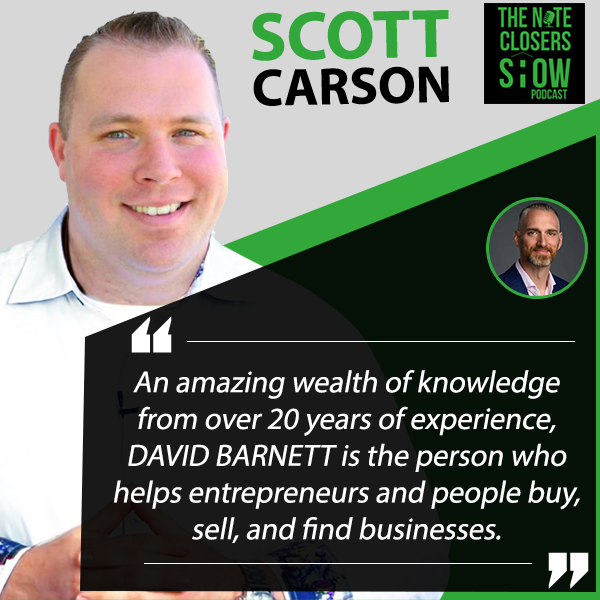
A great conversation with the host of The Note Closer Show Scott Carson


Wednesday, May 3, 2023

Are you being sabotaged


Jon found this war-time list and I wanted to share it with you because these bad actors will find their way into your business one day.

You need to spot the behaviours and stop them fast.

Watch here now: https://youtu.be/H-KRc8x5iTA 

Learn how to buy a business at https://www.BusinessBuyerAdvantage.com 

Book a call with me at https://www.CallDavidBarnett.com 

Join me on Twitter: https://www.twitter.com/dbarnettmoncton 

Books can be found in my Amazon store: https://www.amazon.com/shop/davidbarnett 

Stop missing my new videos. Join my email list here: https://www.DavidCBarnettList.com   

Build an equity asset that is guaranteed to grow over time, never lose value and give you access to liquidity whenever you need it without having to qualify for credit- EVER. Learn more and sign up for a no-obligation consultation at https://www.NewBankingSolution.com

Monday, May 1, 2023

Live - Fuel for fast growing companies that wait to get paid! Guest Kelly Nelson


New Livestream guest- Kelly Nelson from TCI Business Capital I’m happy to have Kelly join me on a live broadcast. He has over a decade of experience helping companies with operating capital solutions to get money in the door more quickly. Tune in and as we’ll be discussing factoring of accounts receivables. What is it? How does it work? Are the things you’ve heard true? Who will it work for? This is a ‘must see event’ for any business that waits to get paid from other businesses. Be sure to join live so that you can ask questions, replay will be available. We’ll be going live on Monday May 1, 2023 at 12 Noon Eastern Time and 1:00 PM Atlantic Time See you there! David C Barnett Thanks to our sponsors: Mark Willis of Lake Growth Financial Services. Build an equity asset that is guaranteed to grow over time, never lose value and give you access to liquidity whenever you need it without having to qualify for credit- EVER. Learn more and sign up for a no-obligation consultation at https://www.NewBankingSolution.com Look good. Get a new shirt from Jeff Alpaugh Customs and save with this link: https://www.JeffAlpaugh.com/dcb10 If your business is struggling to pay off high interest debts and you need help, check out this program from Bardwell Creative. https://courses.bardwellcreative.com/courses/business-debt-settlement-course?ref=6a30ba If you enjoyed this show and want more great small business content, head over to https://www.SMBPodcastNetwork.com and find more great shows and conversations.

Wednesday, April 26, 2023

Buying a Business in an Impending Recession


Tips for buying a business in the face of a recession.

Please fill in the viewer survey for 2023: https://www.DCBsurvey.com 

Rebecca wants to know if it’s a good idea to buy when a recession is likely here.

It all depends on what you know how to operate.

It all depends on the information you have available to run the business.

And.. you need to avoid this trap.

Watch here now: https://youtu.be/yz4K29zOPxk 

Learn how to buy a business at https://www.BusinessBuyerAdvantage.com 

Book a call with me at https://www.CallDavidBarnett.com 

Join me on Twitter: https://www.twitter.com/dbarnettmoncton 

Books can be found in my Amazon store: https://www.amazon.com/shop/davidbarnett 

Stop missing my new videos. Join my email list here: https://www.DavidCBarnettList.com   

Build an equity asset that is guaranteed to grow over time, never lose value and give you access to liquidity whenever you need it without having to qualify for credit- EVER. Learn more and sign up for a no-obligation consultation at https://www.NewBankingSolution.com